
The Deep Plane Facelift: Why Modern Facial Rejuvenation Is About Structure, Not Stretching
The Problem With the Traditional Facelift Approach
A facelift should not make you look like a different person. It should help you look refreshed, balanced and more like yourself.
Yet one of the most common concerns people have when considering facelift surgery is the fear of looking pulled, tight or noticeably altered. The familiar image of an overdone facelift has shaped perceptions of facial rejuvenation for decades, leaving many people wondering whether it is possible to achieve a more youthful appearance without sacrificing their natural identity.
The answer begins with understanding how the face ages.
Facial ageing is not simply a matter of loose skin. Over time, the deeper tissues of the face change position, supporting structures weaken, facial volume shifts and the skin loses some of its elasticity. These changes can contribute to jowls, deeper folds around the mouth, loss of midface definition and a less distinct jawline.
Treating only the visible skin may not adequately address these underlying changes.
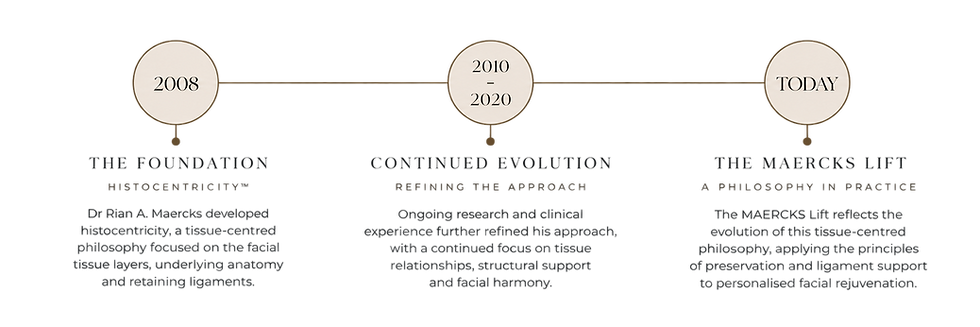
At The Maercks Institute in Miami, Florida, Dr. Rian Maercks approaches facial rejuvenation through a philosophy centred on anatomy, structural support and individual facial proportions. The objective is not to erase every sign of ageing, but to consider how the face has changed and which surgical techniques may best restore balance.
This is where modern deep plane facelift techniques, including the proprietary MAERCKS Lift™, enter the conversation.
What Is a Deep Plane Facelift?
A deep plane facelift is an advanced facial rejuvenation procedure that works beneath the skin and addresses deeper facial tissues.
Traditional facelift techniques may rely more heavily on repositioning the skin and tightening the superficial musculoaponeurotic system (SMAS), a layer of connective tissue and muscle associated with facial expression. Deep plane techniques work within a deeper anatomical plane, allowing the surgeon to release selected retaining ligaments and reposition connected facial tissues.
The retaining ligaments are important because they help anchor facial tissues to underlying structures. As the face ages, changes in tissue position and support can contribute to the appearance of sagging.
By addressing these deeper structures, a deep plane facelift can reposition descended tissues rather than relying primarily on skin tension to create a lifting effect.
Depending on the patient's anatomy and surgical plan, treatment may improve the appearance of:
Sagging cheeks and loss of midface definition.
Deep nasolabial folds between the nose and mouth.
Jowls along the lower face.
Reduced definition along the jawline.
Loose skin and ageing changes in the neck, when neck rejuvenation is included.
The exact result depends on the individual's anatomy, skin quality, degree of facial ageing and the techniques selected by the surgeon.
The distinction is important: a facelift is not simply about pulling the face tighter. It is about understanding which tissues need to be repositioned, how they should be supported and how the result will work with the patient's natural facial anatomy.
Deep Plane Facelift vs SMAS Facelift: What Is the Difference?
Patients researching facelift surgery often encounter two terms: the SMAS facelift and the deep plane facelift. Although both address facial tissues beyond the skin alone, their approaches are not identical.
The SMAS facelift
A SMAS facelift typically involves tightening, repositioning or modifying the superficial musculoaponeurotic system. Depending on the technique, the surgeon may work with this layer separately from the overlying skin.
SMAS techniques can produce significant improvements in facial contour and are appropriate for many patients. Their effectiveness depends on the specific technique, the patient's anatomy and the surgeon's experience.
The deep plane facelift
A deep plane facelift involves dissection beneath the SMAS in a deeper anatomical plane. Selected retaining ligaments are released to allow connected tissues to move more freely as the deeper facial structures are repositioned.
This approach may be particularly useful when addressing more pronounced changes in the midface and lower face.
Which technique is better?
There is no single facelift technique that is best for every patient.
The most appropriate approach depends on the areas being treated, the degree of tissue descent, the patient's facial anatomy, previous surgery and the surgeon's assessment.
A deep plane facelift is not automatically superior in every circumstance. Equally, a technique should not be selected simply because it is more familiar or widely marketed.
At The Maercks Institute, the focus is on selecting an approach that addresses the patient's specific anatomy and aesthetic goals, with an emphasis on natural-looking facial rejuvenation.
What Makes the MAERCKS Lift™ Different?
The MAERCKS Lift™ reflects Dr. Rian Maercks' approach to facial rejuvenation, combining an understanding of deeper facial anatomy with an emphasis on structural restoration, tissue preservation and facial balance.
Rather than viewing the face as a surface that needs to be tightened, the approach considers how the midface, lower face and supporting tissues relate to one another.
This distinction matters because the face does not age uniformly. One patient may be most concerned about jowls and loss of jawline definition, while another may experience more pronounced midface descent or changes around the mouth.
A carefully planned facelift should take these differences into account.
1. Addressing deeper facial anatomy
The MAERCKS Lift™ incorporates a deep structural approach to facial rejuvenation. By considering the underlying tissues and their supporting attachments, the surgical plan can address changes that are not adequately described by loose skin alone.
The objective is to reposition tissues in a way that respects the patient's existing facial proportions.
2. Prioritising natural-looking results
A successful facelift should complement the patient's features rather than create a uniform, recognisable surgical appearance.
The aim is to improve facial contour while preserving individual identity and natural expression. This requires careful consideration of tissue movement, facial proportions and the relationship between the midface, lower face and neck.
3. Considering the midface and lower face together
Facial ageing often affects multiple connected areas. Changes in the cheeks can influence the appearance of the folds around the mouth, while descent in the lower face can contribute to jowling and reduced jawline definition.
For suitable patients, a comprehensive deep plane approach may address several of these concerns within one surgical plan.
The specific areas treated depend on individual anatomy and whether additional procedures are appropriate.
4. Personalising the surgical plan
No two faces age in precisely the same way. A personalised assessment helps determine which structures require attention and which areas may be better left untreated.
This is particularly important for patients seeking refinement rather than dramatic change.
The guiding principle is simple: Structure Over Stretch™. The focus is on understanding the anatomy first, then determining how surgery may improve balance and contour without unnecessarily compromising natural features.
From a Rectangle to a Heart: Understanding Facial Proportion
A concept associated with the MAERCKS Lift™ approach is the idea of moving from a more rectangular facial appearance towards a softer, more heart-shaped contour.
This is not a universal definition of beauty, nor should every face be shaped to fit the same ideal. It is a way of discussing how age-related changes in the cheeks, jawline and lower face can influence overall facial proportions.
As tissues descend and jowls develop, the lower face may appear heavier or wider relative to the midface. Restoring support and improving the transition between facial regions may create a more balanced appearance in appropriately selected patients.
The objective is not to manufacture a particular face shape. It is to consider how the patient's original proportions have changed and whether surgery can restore a more harmonious relationship between them.
Facial rejuvenation should remain individual. A result that suits one person's bone structure and features may not be appropriate for another.
Who Is a Good Candidate for a Deep Plane Facelift?
A deep plane facelift may be worth considering if you are concerned about visible facial ageing that cannot be adequately addressed through non-surgical treatments.
Potential candidates may include people experiencing:
Noticeable jowls or reduced jawline definition.
Descent of the cheeks or loss of midface support.
Deepening folds around the nose and mouth.
Changes in the lower face that make the face appear heavier or more tired.
A desire for longer-lasting improvement in facial contour.
Age alone does not determine suitability. Some people develop significant facial changes earlier than others, while others maintain good tissue support well into later life.
General health, smoking status, medications, healing capacity, previous facial procedures and individual expectations all influence whether surgery is appropriate.
A consultation with a qualified, experienced plastic surgeon is essential to assess these factors and discuss the potential benefits, limitations and risks.
Patients with relatively mild changes may be better served by a less extensive procedure or a non-surgical option. Others may require a more comprehensive plan involving the face and neck.
The right procedure should follow the assessment, rather than the assessment being shaped around a predetermined procedure.
Does a Deep Plane Facelift Look Natural?
Natural-looking facelift results are one of the most common priorities for patients considering facial rejuvenation.
However, naturalness is not determined by the name of a surgical technique alone. It depends on surgical planning, anatomical understanding, appropriate tissue repositioning, the surgeon's judgement and the patient's individual characteristics.
A well-planned facelift aims to improve facial contour without creating excessive tension or unnecessarily changing the patient's defining features.
It is also important to recognise that a natural result does not mean that every wrinkle or sign of ageing will disappear. Skin texture, fine lines, sun damage and changes in skin quality may persist after surgery and may require separate consideration.
The most appropriate outcome is one that reflects the patient's goals while respecting what surgery can realistically achieve.
When researching a facelift surgeon, look beyond promotional descriptions. Review relevant before-and-after photographs, consider the consistency of results across different patients and ask how the surgeon plans to address your specific concerns.
You should also discuss the risks of surgery, the possibility of asymmetry, scar placement, healing and the potential need for revision.
How Long Is Recovery After a Deep Plane Facelift?
Recovery is an important part of planning facelift surgery, particularly for patients travelling to Miami or balancing treatment with professional and family commitments.
Although deep plane techniques may allow meaningful tissue repositioning without relying solely on skin tension, they are still major surgical procedures. Recovery should never be treated as insignificant.
In the initial recovery period, patients may experience swelling, bruising, tightness, temporary numbness and discomfort. These effects vary depending on the extent of surgery, individual healing and whether procedures such as a neck lift are performed at the same time.
As a general guide:
First week: Swelling, bruising and the need for rest are common. Follow-up appointments and postoperative instructions are important.
Weeks two to three: Many patients see visible improvement as bruising and swelling begin to settle, although noticeable swelling may remain.
Following weeks and months: Facial tissues continue to heal, and the contours gradually become more refined as residual swelling resolves.
These timeframes are estimates rather than guarantees. Some patients need considerably longer before they feel comfortable returning to social or professional activities.
Patients should ask their surgeon about their individual recovery plan, restrictions on exercise, wound care, follow-up arrangements and when it is safe to travel.
If you are travelling internationally for facelift surgery, allow sufficient time for postoperative assessment and recovery before flying home. The appropriate interval should be determined by your surgical team, taking account of the procedure performed and your individual risk factors.
How Long Do Deep Plane Facelift Results Last?
A facelift can produce long-lasting improvements, but it does not stop the natural ageing process.
The face will continue to change over time, and the longevity of the result depends on factors including genetics, skin quality, sun exposure, lifestyle, weight stability, surgical technique and the extent of the original correction.
Many patients seek facelift surgery because they want a more substantial improvement than temporary treatments can provide. Nevertheless, no surgeon can guarantee a particular duration or promise that a patient will never require further treatment.
Maintaining good skin health, protecting the skin from ultraviolet exposure and following appropriate skincare advice may support the long-term appearance of the face.
It is also worth distinguishing between structural facial rejuvenation and skin resurfacing. A facelift primarily addresses tissue position and contour; it does not independently correct every concern related to pigmentation, fine lines or skin texture.
A personalised long-term plan may therefore include separate skin treatments when appropriate.
What Does a Deep Plane Facelift Cost in Miami?
The cost of a deep plane facelift in Miami varies considerably between practices and patients.
Pricing can depend on the surgeon's expertise, the complexity of the procedure, the areas treated, anaesthesia, facility fees, postoperative care and whether additional procedures are performed.
A comprehensive facelift involving the midface, lower face and neck may have different costs from a more limited procedure.
When comparing facelift prices, it is important to establish precisely what is included. Ask whether the quoted fee covers the surgeon, anaesthesia, operating facility, follow-up appointments and any necessary postoperative support.
The lowest advertised price should not be the sole consideration when selecting a surgeon for a complex procedure.
At The Maercks Institute, a consultation provides an opportunity to discuss your concerns, determine whether the MAERCKS Lift™ or another approach may be suitable, and understand the recommended treatment plan and associated costs.
An individual assessment is necessary before an accurate recommendation can be made.
Why Choose The Maercks Institute for Facelift Surgery in Miami?
Choosing a facelift surgeon is a personal decision that deserves careful research.
Beyond the procedure itself, patients should consider the surgeon's qualifications, experience with the relevant technique, approach to patient safety, aesthetic philosophy and commitment to postoperative care.
At The Maercks Institute in Miami, Dr. Rian Maercks' approach to facial rejuvenation emphasises anatomy, proportion, individual identity and structural support.
The aim is to understand what is contributing to the appearance of facial ageing and develop a treatment plan around those findings, rather than applying the same approach to every patient.
For people researching a deep plane facelift in Miami, a consultation can help clarify whether surgery is appropriate, which areas may benefit from treatment and what a realistic outcome might look like.
Patients should feel comfortable asking questions, discussing concerns about looking overdone and understanding the limitations and risks before making a decision.
Beauty, Balanced with Artistry. Facial rejuvenation should be guided by the individual, not by a standardised ideal.
Frequently Asked Questions About Deep Plane Facelifts
What is the difference between a deep plane facelift and the MAERCKS Lift™?
A deep plane facelift describes a category of surgical technique that works beneath the SMAS and may involve releasing retaining ligaments to reposition facial tissues. The MAERCKS Lift™ is Dr. Rian Maercks' proprietary approach to facial rejuvenation, informed by deep structural principles, tissue preservation and individual facial proportions. The specific technique and treatment plan should be discussed directly with the surgeon.
Is a deep plane facelift better than a traditional facelift?
Not necessarily. A deep plane facelift may be advantageous for certain patterns of midface and lower-face ageing, while other techniques may be appropriate for different patients. The best option depends on the patient's anatomy, goals, health and the surgeon's assessment.
Will a facelift make me look different?
The aim of natural-looking facial rejuvenation is to improve contour while preserving the patient's identity. However, every surgical procedure changes appearance to some degree, and individual results cannot be guaranteed. Discuss your preferences and concerns with your surgeon before surgery.
Does a deep plane facelift treat the neck?
It can be combined with neck rejuvenation when indicated, but a deep plane facelift does not automatically include a neck lift. The appropriate treatment depends on neck skin laxity, muscle changes, fat distribution and the patient's goals.
How long does a deep plane facelift last?
Results can last for many years, but longevity varies between patients. Surgery does not stop ageing, and facial tissues continue to change over time.
Is a deep plane facelift performed under local anaesthesia?
Anaesthesia depends on the procedure, the patient's medical circumstances and the surgeon's plan. Some facial procedures may be performed with local anaesthesia and appropriate sedation, while more extensive surgery may require general anaesthesia. Patients should confirm the recommended anaesthetic approach during consultation.
How do I know if I need a facelift or a non-surgical treatment?
Non-surgical treatments may be suitable for selected concerns involving skin quality, fine lines or volume. They cannot reproduce the same tissue repositioning as facelift surgery. A consultation can help establish whether a surgical procedure, a non-surgical treatment or a combination of approaches is most appropriate.
Explore Facelift Surgery at The Maercks Institute
Considering a facelift is about more than deciding whether you want to look younger. It is about understanding which changes concern you, what can realistically be improved and how to approach facial rejuvenation without losing the features that make you recognisably yourself.
The deep plane facelift offers one approach to addressing deeper facial structures, while the MAERCKS Lift™ reflects Dr. Rian Maercks' philosophy of combining structural understanding with personalised aesthetic judgement.
If you are researching a deep plane facelift in Miami, arrange a consultation with The Maercks Institute to discuss your goals, explore suitable options and understand the potential benefits, limitations, recovery requirements and risks of surgery.
The goal is not to create a different face. It is to approach facial ageing with precision, balance and respect for your natural features.
Book a consultation with The Maercks Institute to learn more about facelift surgery in Miami.
All surgical procedures carry risks, and individual results vary. The information in this article is educational and does not replace a personalised medical consultation or constitute a guarantee of results.




Comments